
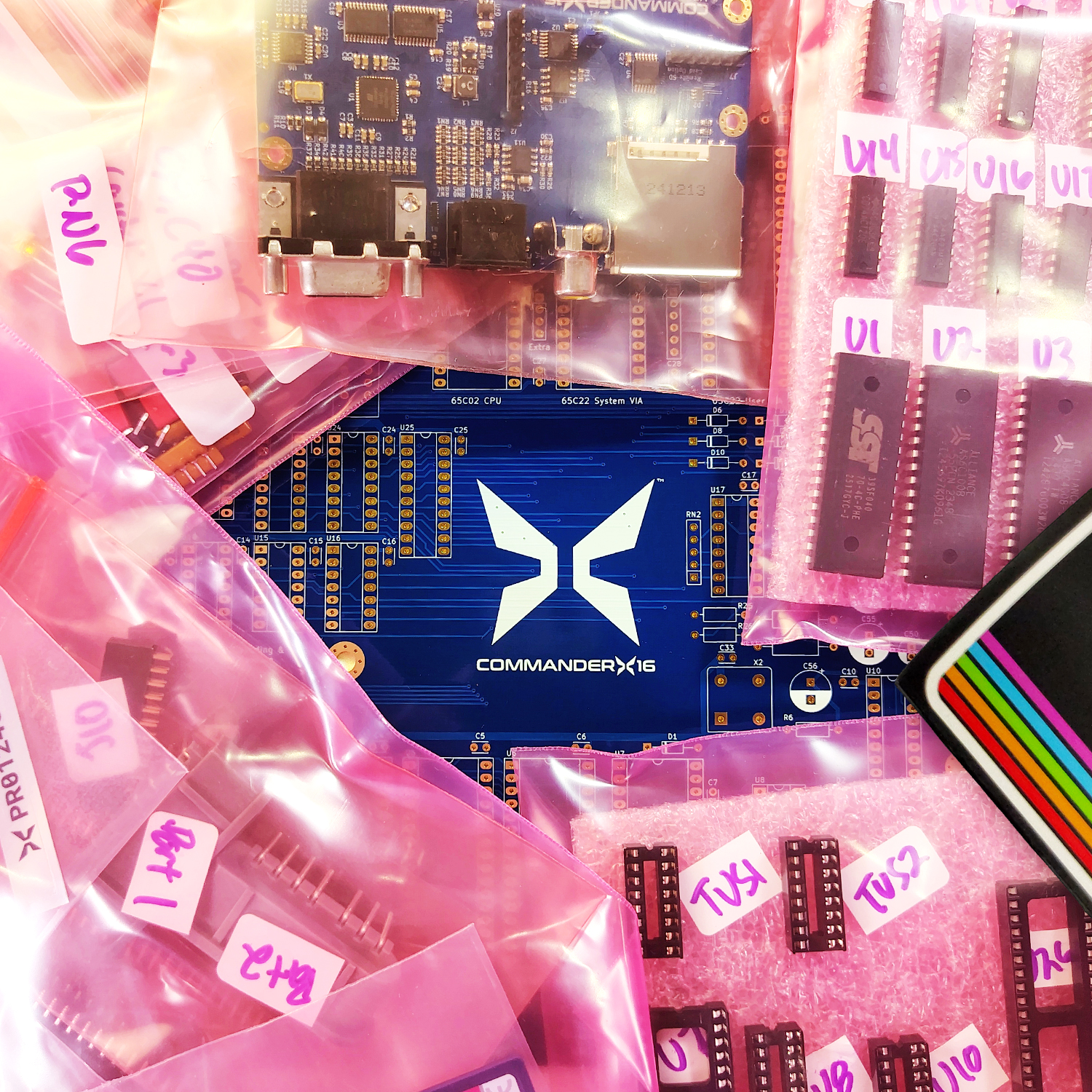
At long last…
The Commander X16 Build Kits are finally here!
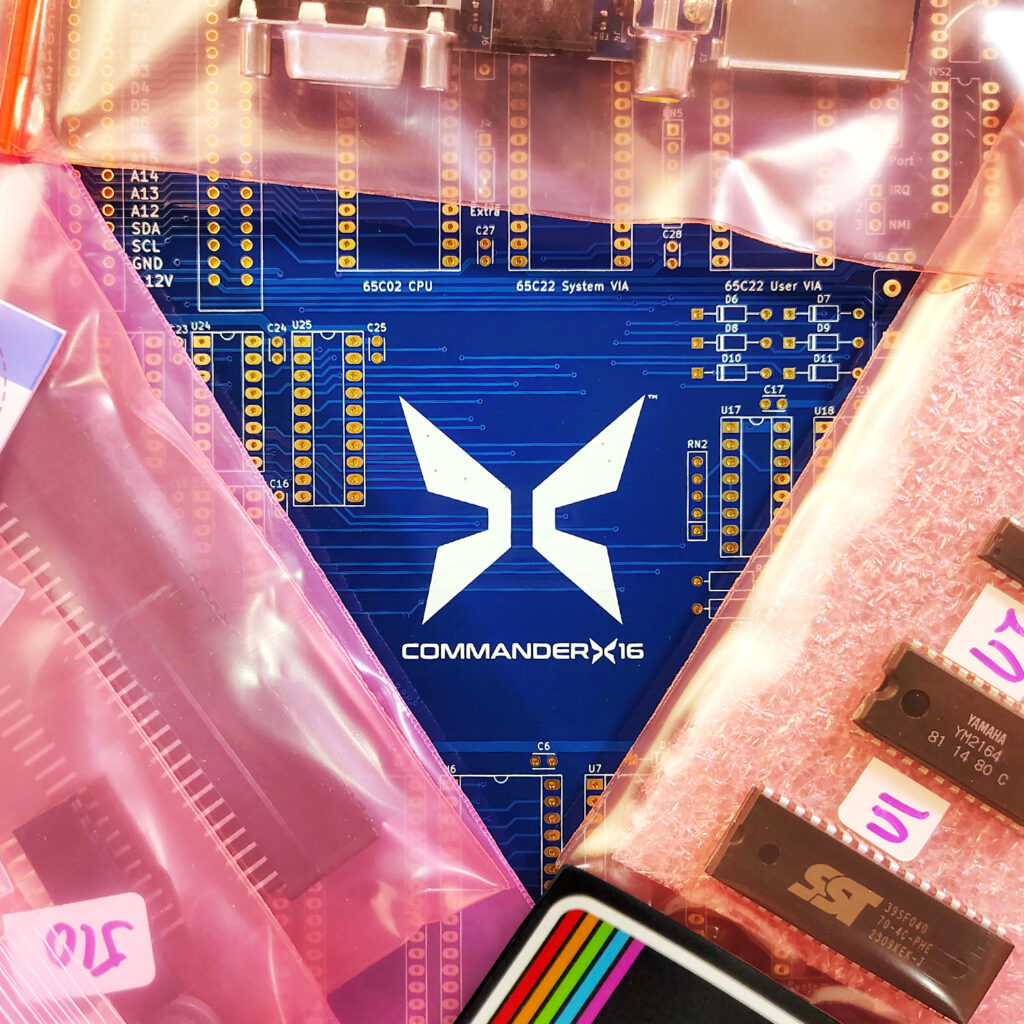
Faster and more powerful microcontroller, real DMA audio, OPL3, Gravis UltraSound, NE2000 emulation with Wi‑Fi, USB HID interface, RTC, and 256 KB zero‑wait RAM. It’s the most powerful all‑in‑one ISA card ever made!
PicoMEM 2 by FreddyV – All in One 8-Bit ISA Expansion Card – TexElec
We’ll have items for sale and will be showing off the NEW PicoMEM 2 by FreddyV… COMING SOON!
Hello everyone!
TLDR alert! But… we have three new boards to announce! We also have an update on a few older products but first, we are officially announcing the release of the X16 Dual MIDI / Wavetable Card. This card will allow you to drive your external MIDI equipment, as well as a standard 26-pin wavetable module from your Commander X16! Melodious now supports MIDI playback and you can play the MIDI enhanced version of Attack of the Petscii Robots with any General MIDI device.
Speaking of general MIDI devices, our second product announcement is the Little Dreamer wavetable module. This small module uses the Dream SAM2695 single IC MIDI synthesizer. This low-cost module packs a powerful punch for its size. Not only does it boast an impressive General MIDI instrument set, but also an MT-32 sample set which sounds very nice. This is the sound chip the 8-Bit Guy used in his recent X16 update video. Hear it in action here: X16 2024 Update
The final new product is one I developed while working on the Little Dreamer, and that is the USB MIDI Wavetable Header. This simple device uses a single USB to MIDI IC and has the circuitry to drive most standard 26-pin wavetable modules. Just plug it in, and use it with your favorite MIDI enabled software, or use your wavetable as a synth in favorite DAW!
You may have noticed the X16 Network / Serial card has been out of stock for some time now. A HW bug was brought to our attention which caused the interrupt to fail. We had worked out a patch to resolve this issue, but a larger issue appeared as we worked through ANSI support for ROMTERM. In a nutshell, I redesigned the card making sure the data lines stay completely away from the ESP32 module.
As we were testing the network card, another issue became apparent with the 90-degree riser board used by Lazer3D cases. The problem is very intermittent, but it did seem to cause enough reflection for occasional failures. We did more testing and redesigned this card with signal termination. The terminators seem to resolve enough reflection to fix any remaining gremlins.
We finally feel that we’ve done enough testing to release them both for sale again. If you own a riser or network card purchased before Oct 2024, please contact us and we’ll replace them free of charge. Please accept our apologies for the issues, but we want to make sure everyone has what they paid for. We haven’t received the final PCBs; they arrive later this week, but I wanted to make the announcement asap. Please also allow us a little time to get them built. If you do happen to place an order for another card, please let us know so we can send your replacement riser and/or network card along at the same time.
Whew!
Thank you all so much for supporting TexElec and the Commander X16! We are privileged to serve the vintage computing community, and we couldn’t do it without you!
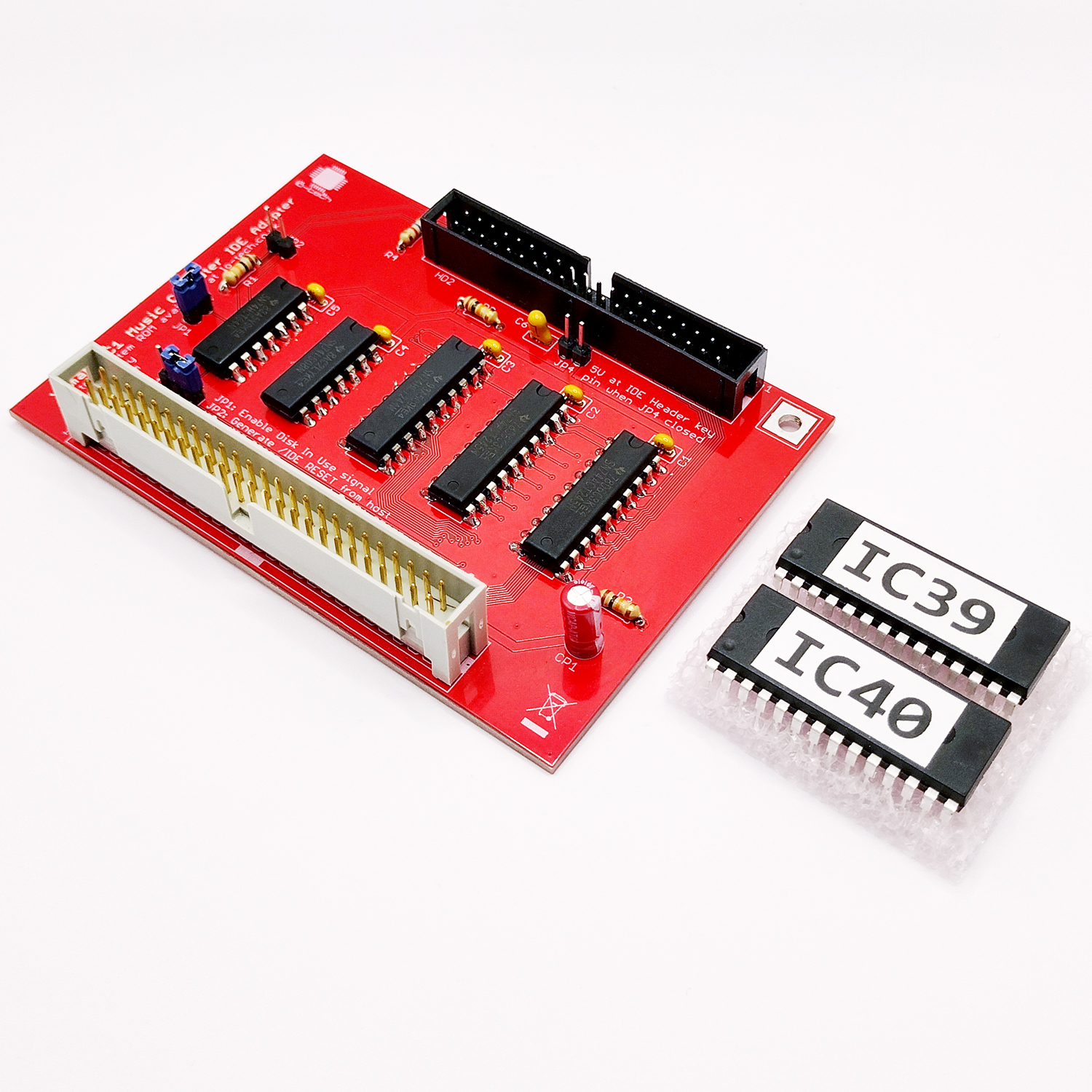
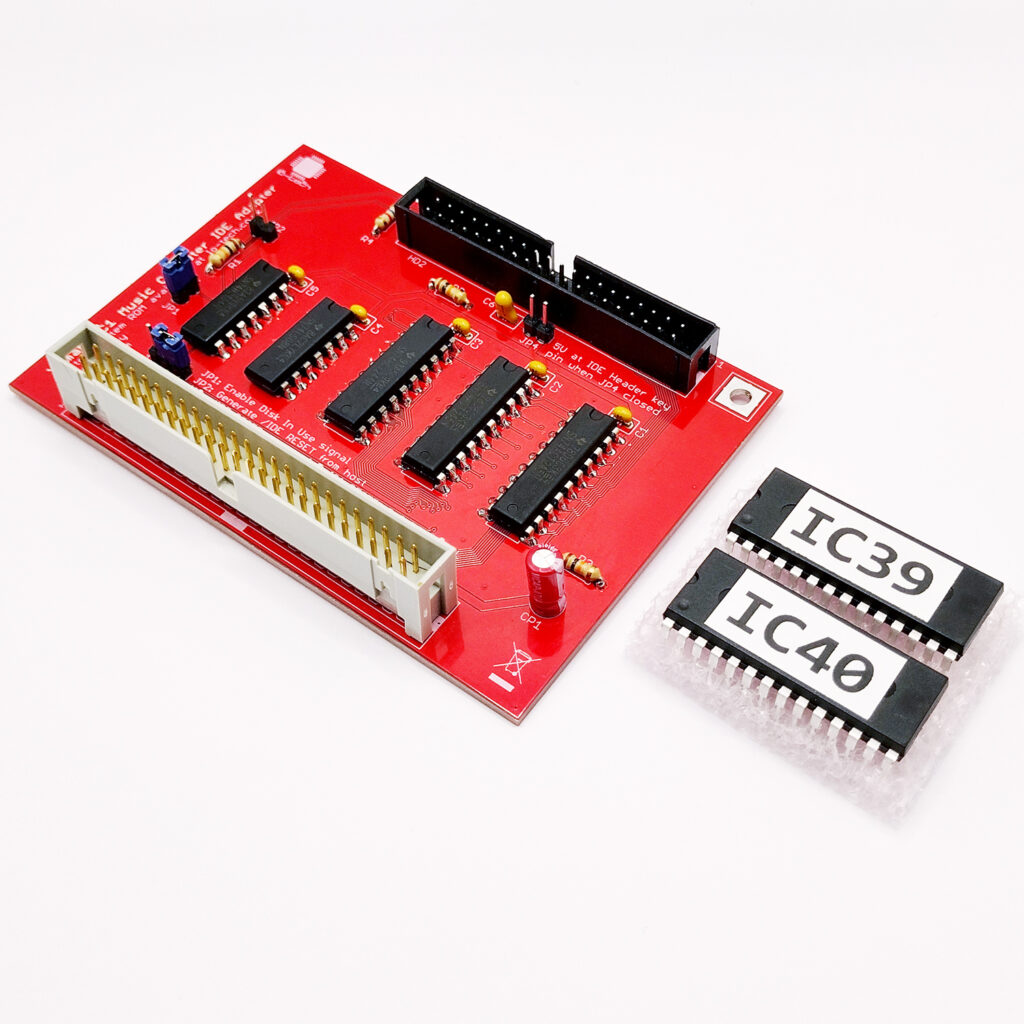
I know it’s hard to believe but we finally have the long awaited Yamaha C1 IDE Adapter ready for sale!
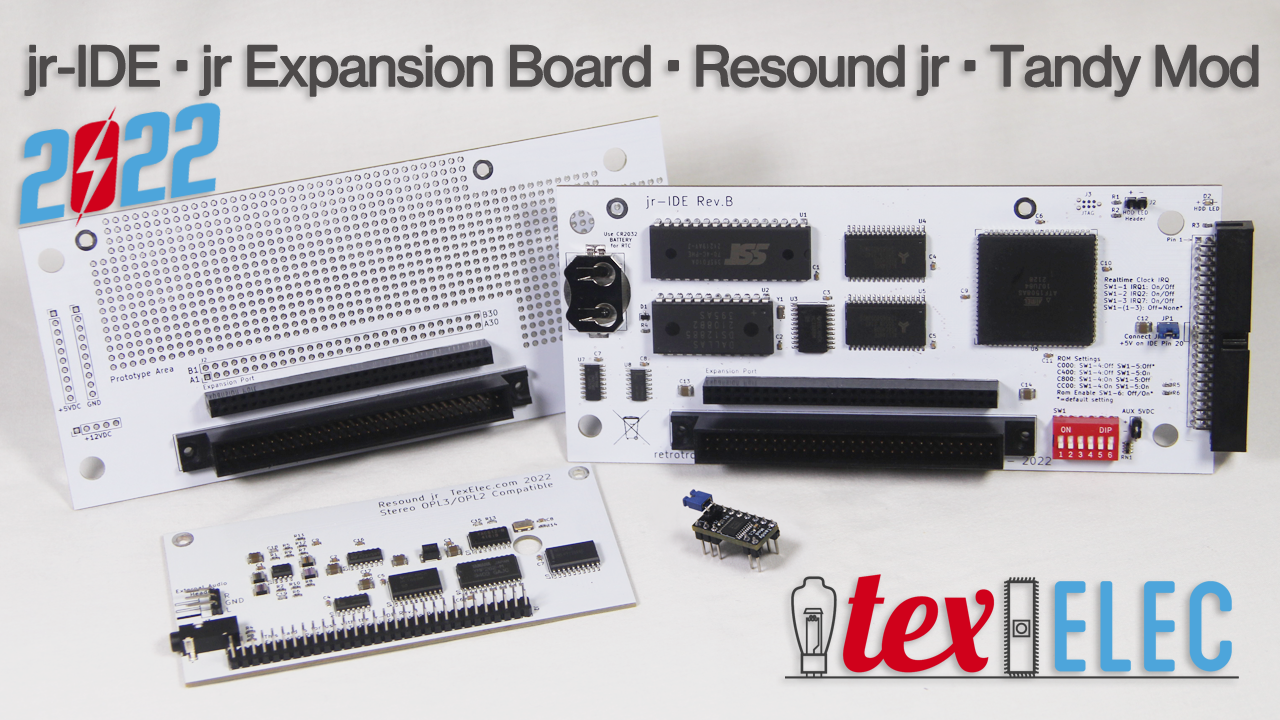
Hello PCjr fans!
The original Jr IDE Rev A went out of stock on the TexElec website about three months ago, when one of the CPLDs went out of stock. At the time, all of the suppliers said it would be May of 2023 before they were back! We decided to make a few updates and we are now happy to introduce the Jr IDE Rev B.
Functionally, the two cards are identical with a few minor changes. The POST display was removed, and we added a battery for the real-time clock. The IDE pinout was inverted, which allows a standard IDC right-angle box header to be used. We put a capacitor near the IDE power pin to help with CF card stability. But one of the most important additions is the new expansion header. The expansion header will allow for lower cost cards to be added on without another sidecar connector or enclosure.
This leads me to our second product announcement, the Resound jr OPL3 / Adlib clone! We ported our popular Resound 2 OPL3 card to the PCjr. We couldn’t add an expansion port without making a card for it! It has a built-in line-level 3.5mm / 1/8″ headphone jack built-in and a 3-pin header if you want to add your own port on the back of the sidecar.
I know, I know, you already bought a Rev A Jr IDE, but how are you supposed to add a Resound jr to your system? Not to worry, the third product we’re releasing is the TexElec jr Expansion / Prototype Board. This board has the same physical dimensions and expansion port as the Jr IDE Rev B. It also comes with a sidecar connector preinstalled! It can be installed in a sidecar just like the Jr IDE, and also has a prototype area for DIY projects!
Lastly, we are releasing the TandyMod for the PCjr. This board has been around for some-time now and will change the PCjr video memory map to match that of the Tandy 1000. This allows many Tandy 1000 specific games to run on the PCjr. With the release of the Resound jr, we thought it would be important to increase game compatibility as much as possible.
We made a video to release at the same time as the product launch. The video discusses the cards in more detail and shows a demo of them in action! It also shows how to install the TandyMod in your PCjr.
You can check it out here: https://youtu.be/az39Hpfn6KY
Whew, it took us a while to get here, but they are all for sale in the store today. Thanks for everyone’s patience, and continued support of our store. We couldn’t do it without our great customers, and we hope to keep making vintage PC parts for many years to come!
Thanks!
Kevin & Sara
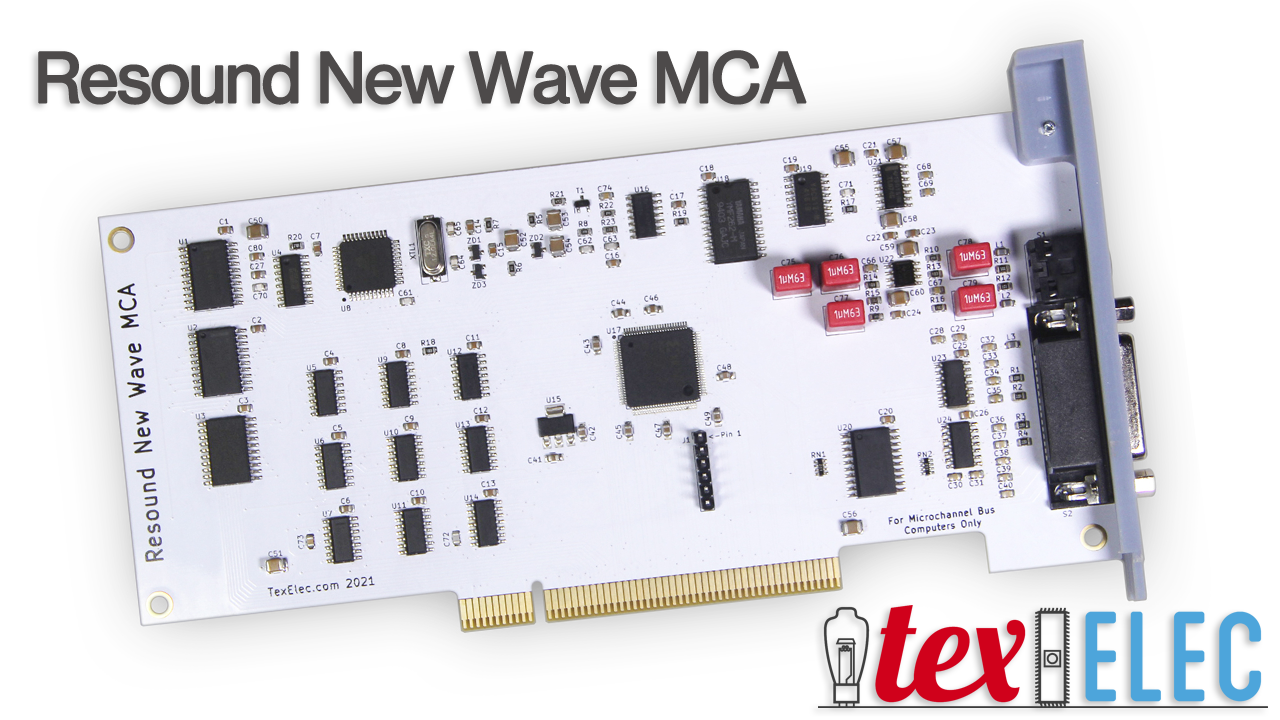
We recently announced the release of our latest sound card, the Resound New Wave MCA is our recreation of TubeTimes Snark Barker MCA for the microchannel bus. I made a video discussing the differences in our card, installation in a IBM Model 70 & some demos thrown in too. If you have a moment, take a look and see it in action!
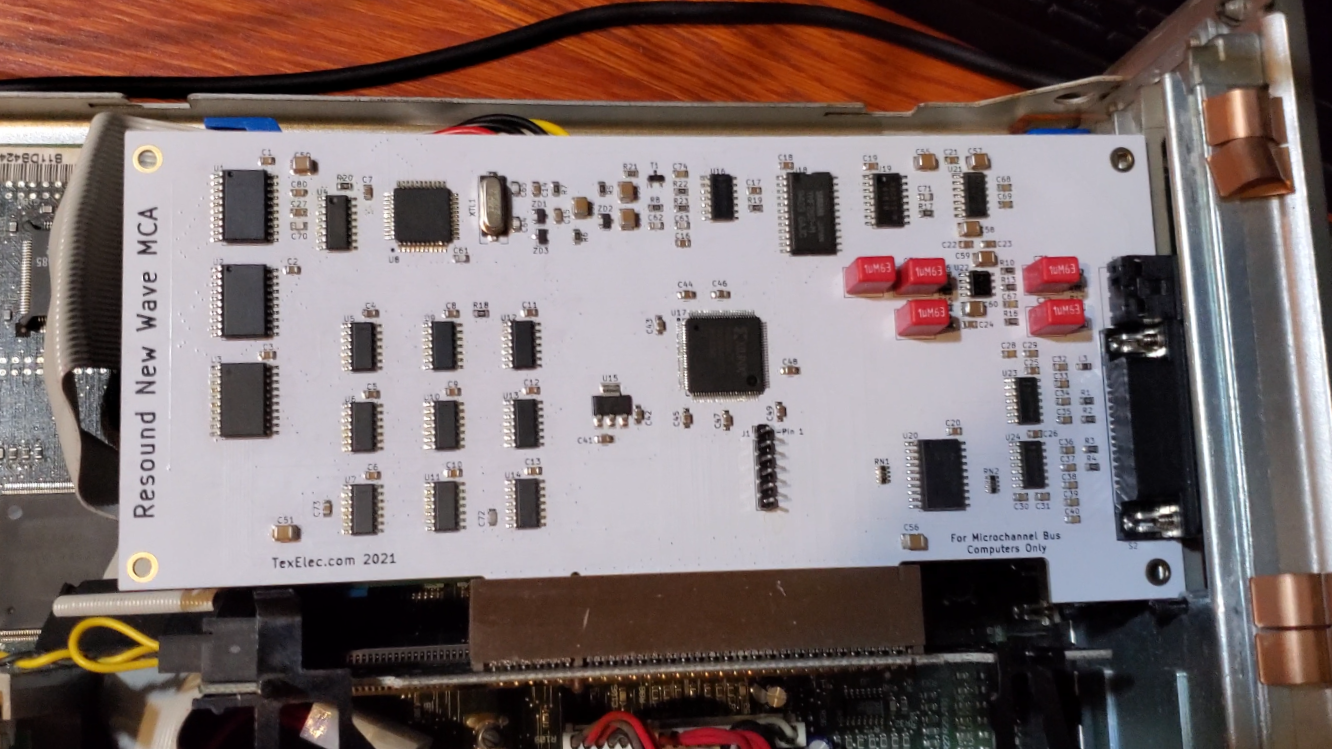
We’ve been working on this card for many months now, and I will need to type documentation longer than the Magna Carta to describe all of the features and caveats of this card. Honestly any Sound Blaster MCA or variant will encounter varying issues on different microchannel machines. But more on that later.
Thanks so much to Eric (aka TubeTimeUS) for the design of the original Snark Barker MCA and some assistance along the way. I decided to modify the card to be surface-mount and add an OPL3 instead of the original OPL2. I also removed the microphone input to save a little cost and used the same premium opamp circuit I use on our other Resound cards. In addition, I modified the roll-off filter used on the original Sound Blaster to a higher frequency. It may cause noise on some lower quality samples, but 22 & 44khz samples sound much less muddy. There were a few other minor changes, but they do not affect functionality. All the parts have finally showed up after numerous delays, but for now, here is a quick video of the card in action!
We should have them on sale in a few days after posting this video, so stay tuned and thanks for taking a look!